

I used Apple’s $5,000 Pro Display XDR monitor for a month — here's what happened
I used Apple's $5,000 Pro Brandish XDR monitor for a month — here'south what happened
It's been more than xxx years since I considered myself an Apple fan.
The day that my family sold my starting time-ever computer, an Apple IIGS, so nosotros could buy a more than "of-the-moment" PC was the day I turned my back on Cupertino. Even though that IIGS was a terrific computer, the world was moving on, and I knew I had to, too. And as I got more than and more into gaming and PC edifice, and came to understand the greater inherent value in having a reckoner you control every function of than one company controls every part of, Apple drifted more and more to the back of my mind and middle.
Somewhen, I ended that I was too much in the Steve Wozniak corner to ever requite over my mind and my life to the Steve Jobs vision that won out at 1 Infinite Loop—and, to a large caste, in the manufacture (and the world as a whole).
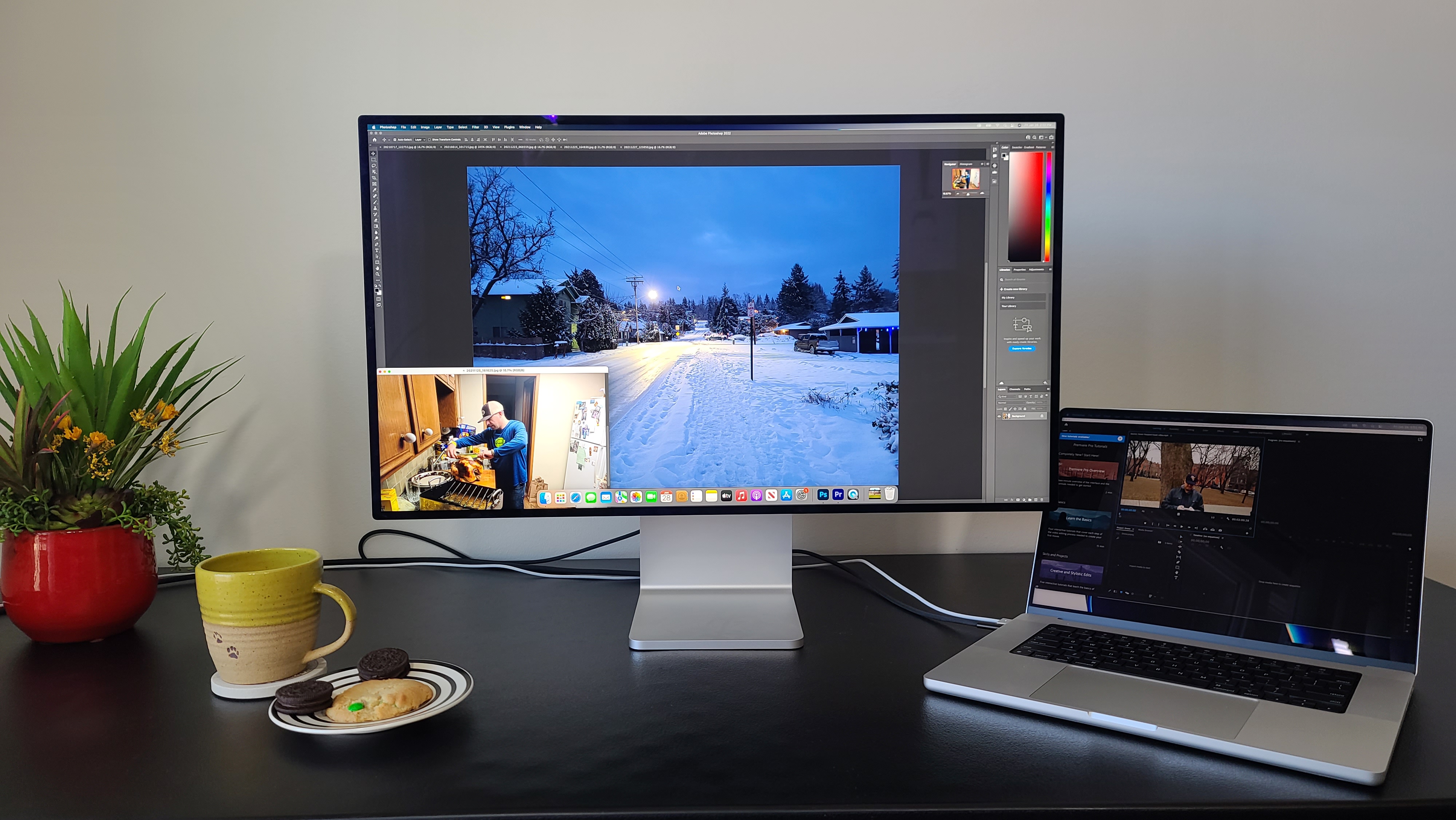
Having unfettered admission to 6,016 x 3,384 pixels (what Apple calls 6K) on a 32-inch monitor gave me an unprecedented amount of existent manor for arranging the endless windows I tend to accept open at one time.
The more I've seen of recent Apple products, however, the more I've found myself wondering if I demand to crevice open that door again. The beginning nick in the dam was concluding year's 12.9-inch iPad Pro 2021, with its reduced footprint and spectacular display; I loved it so much, I had to purchase one to replace my ancient (er, 2016) iPad Air, even though I no longer needed it for work.
So came the new 2021 MacBook Pro this past fall, with the high-end sixteen-inch model sporting a refined design, that scintillatingly speedy M1 Max processor, and some other killer screen. Last, but certainly not to the lowest degree, was the Pro Display XDR monitor—the oldest of the three (information technology first appeared in 2019), merely begetting both the same essential display engineering science (in a format that would work with any Thunderbolt 3–supporting Mac) and the commitment to aesthetics and performance that have become the trademarks of Apple tree'southward releases.
Of the iii, the Pro Display XDR surprised me the most. Though a monitor is critical for any desktop setup, it'south not something I've tended to think much about; I've taken the path of least resistance and lowest expense every time I've had a choice. With the Pro Brandish XDR, all the same, that's not an option.
Yes, at that place'due south the price (which nosotros'll get to). But it'due south also big: 28.iii ten 16.two x1.ane inches without the stand (which nosotros'll also go to). And, oh yes, there's the pocket-size matter of these 2 qualities combining into something that just hardcore professionals, especially of the creative persuasion, are likely to demand. And though my job involves frequent use of Adobe software (primarily Photoshop, Lightroom Classic, and Premiere Pro) and office applications, I never would have concluded I would need the power something similar this could offer.
Merely I forgot a classic computing rule: The more than you'll have, the more you'll use. Having unfettered access to 6,016 x 3,384 pixels (what Apple calls 6K) on a 32-inch monitor gave me an unprecedented amount of existent estate for arranging the countless windows I tend to accept open at one time. I could open up photos at their total resolution and see intricate details with the 218ppi screen density, or piece of work with 4K videos and even so have plenty of room left over for Premiere Pro's interface elements. And the tight integration between the hardware and macOS Monterey made it unfathomably piece of cake to change the monitor's specific settings and see the results immediately.
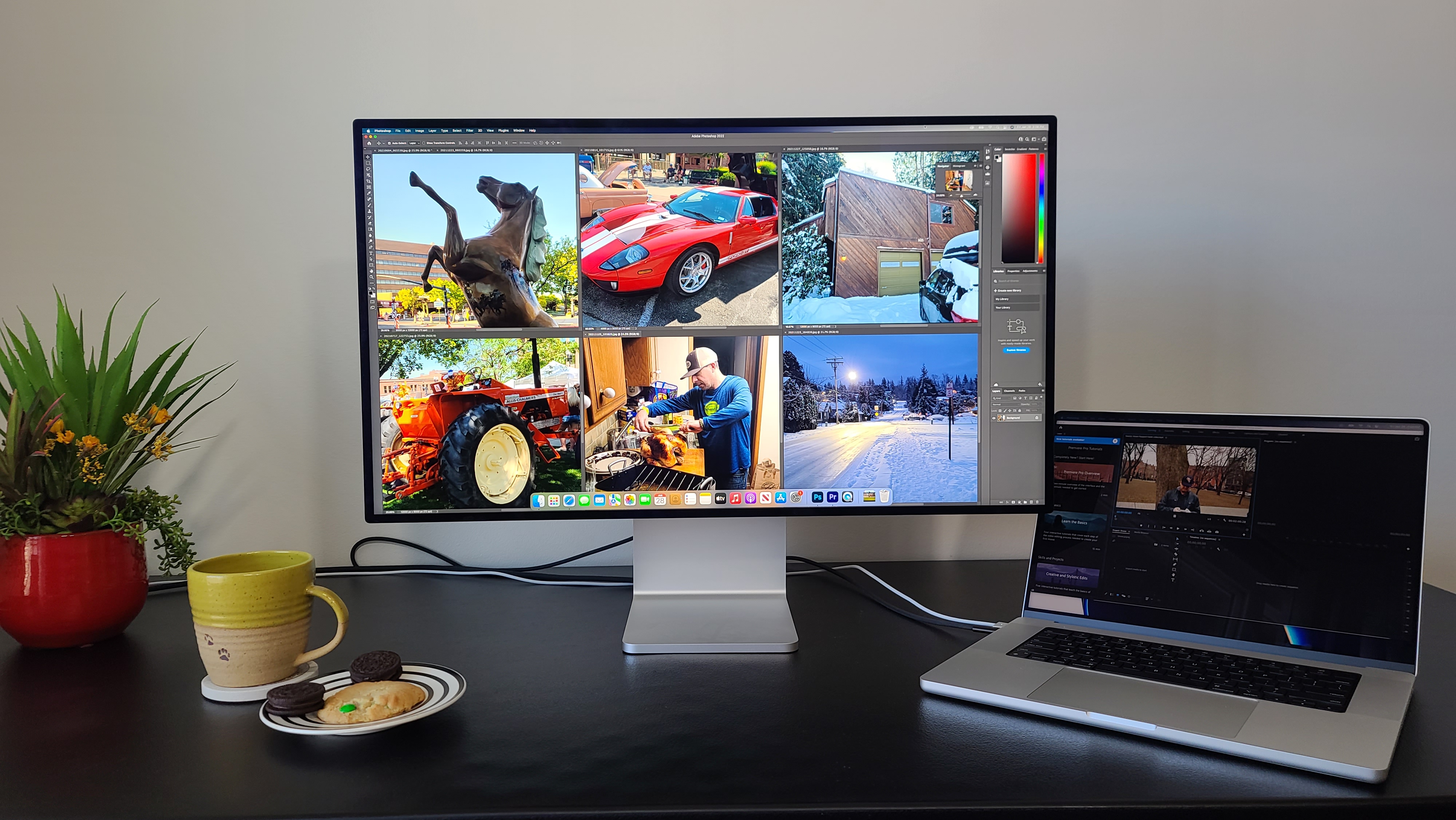
Equally much equally I love Windows, the ease of utilize here was unequalled. And the sprawling multifariousness of built-in reference modes, which include presets for domicile and office use, HDR video, digital movie theater, photography, print imagery, and Internet and Web work, further ensures there's a usage scenario for anybody.
The quality of the display was also a pace (or three) in a higher place what I'm used to, and the HDR performance delivers sparkling new dimensions of hyperreality to still and moving images alike.
The quality of the display was as well a step (or three) in a higher place what I'yard used to. Apple ofttimes touts the Extreme Dynamic Range (XDR) capabilities of things like this, the MacBook Pro, and the iPad Pro, and the high dissimilarity and brightness y'all get as a result. And here'southward a place where it really makes a deviation. A total of 576 individually controlled (and factory calibrated) total-assortment local-dimming zones delivers sumptuous contrast (1,000,000:ane, per Apple) that ensures blacks look infinitely inky next to blazing whites.
You're besides always getting top brightness whether yous're viewing SDR (500 nits) or HDR content. No, you won't see those max HDR brightness numbers in every case — one,000 nits of sustained, full-screen brightness comes effectually all the time; the 1,600-nit peak brightness, which in my testing I've found relegated to tiny pattern sizes, not and so much — but you do see them, and they bring out sparkling new dimensions of reality and hyperreality to still and moving images alike.
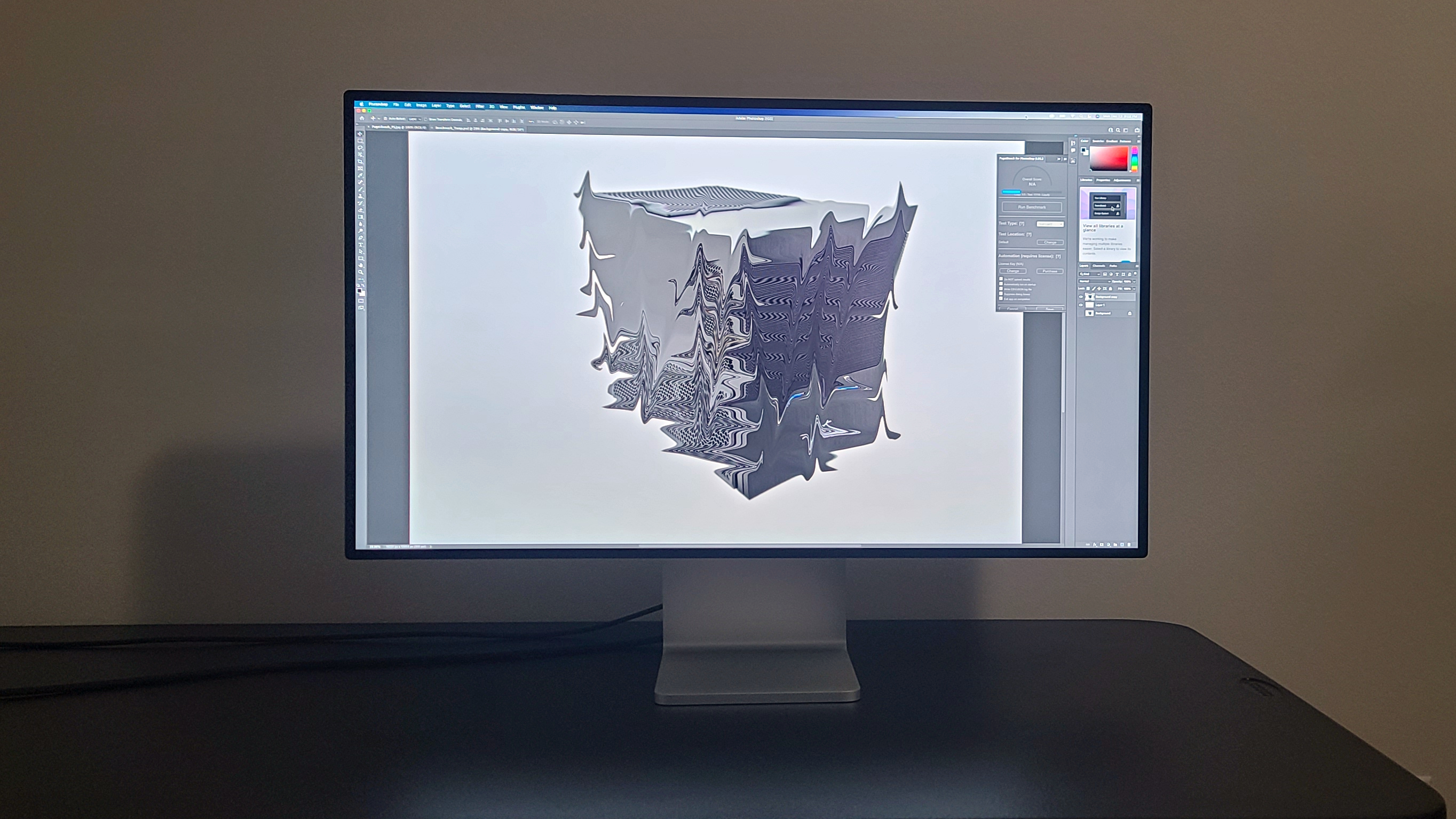
Our lab testing (with a Klein K10-A colorimeter and DisplayCal calibration software) confirmed Apple'south claims in all these areas, and showed tight adherence to color standards: The Pro Display XDR managed nearly identical coverage of both the sRGB and wider DCI-P3 color gamuts across its presets (with the out-of-the-box settings' 106.seven% for the onetime and 75.6% for the latter cleanly representative).
Going back to "regular" PC monitors subsequently bathing in these images was difficult plenty. Simply—and I cannot stress enough how little I commonly care almost this—the Pro Brandish XDR as well looks next-gen cool.
The housing is crafted from ultra-sleek, super-smooth depression-carbon aluminum; and the round depressions on the back both facilitate ventilation and give the whole thing an otherworldly, sci-fi look that neatly completes the design. As is typical for Apple tree, there's no waste, with the power connector, Thunderbolt iii port, three USB Type-C ports, and the stand connector being all you'll discover (aside from the Apple logo and the product proper noun).
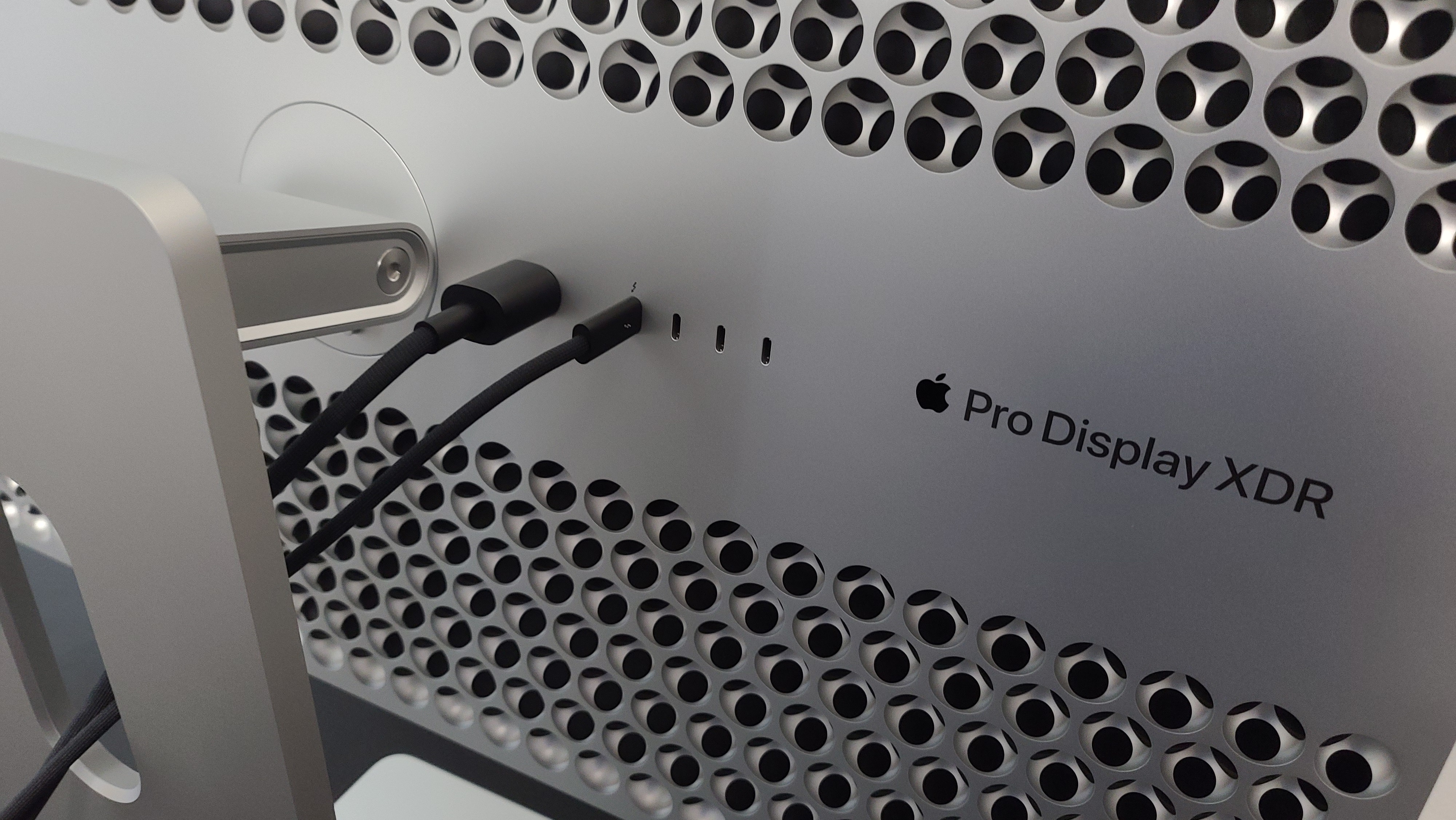
Inside and out, null has been left to chance. Even the included Apple Polishing Cloth, which became infamous online in the wake of the release of the new MacBook Pro, lives upward to the inflate hype; aye, it's the best way to make clean a monitor I've ever found. And so sue me.
Anyway. Am I ready to renounce the PC, drop everything, and move back to Apple tree full-fourth dimension? Not quite still. Every bit practiced equally the Pro Brandish XDR is, it's non quite perfect for me.
Let's talk about that toll, since Apple won't let me go along our evaluation unit of measurement forever. The lower-toll configuration costs $4,999—and no, that isn't a typo. In an era when, even given supply-chain shortages and cryptocurrency-inflated graphics card prices, you tin can build or buy a peak-tier figurer with all the peripheral trimmings for far less, that's a lot of money to pay just for a monitor. (And if you want the version with nano-texture glass, which reportedly reduces glare without torpedoing the contrast, you're going to accept to crush out $five,999.)
Then there'southward the Pro Stand up. Don't get me wrong—I honey it, too. It's svelte and sturdy, its await meshes seamlessly with the Pro Display XDR's, and both it and the monitor are designed in such a way (with magnets and the locking mechanism) that information technology not only is i of the most secure stands I've ever seen on a monitor, it's likewise the easiest to attach. But it suffers from two primal problems: Information technology does not come up with the Pro Brandish XDR and, if you want to buy it separately, information technology volition run yous another $999.
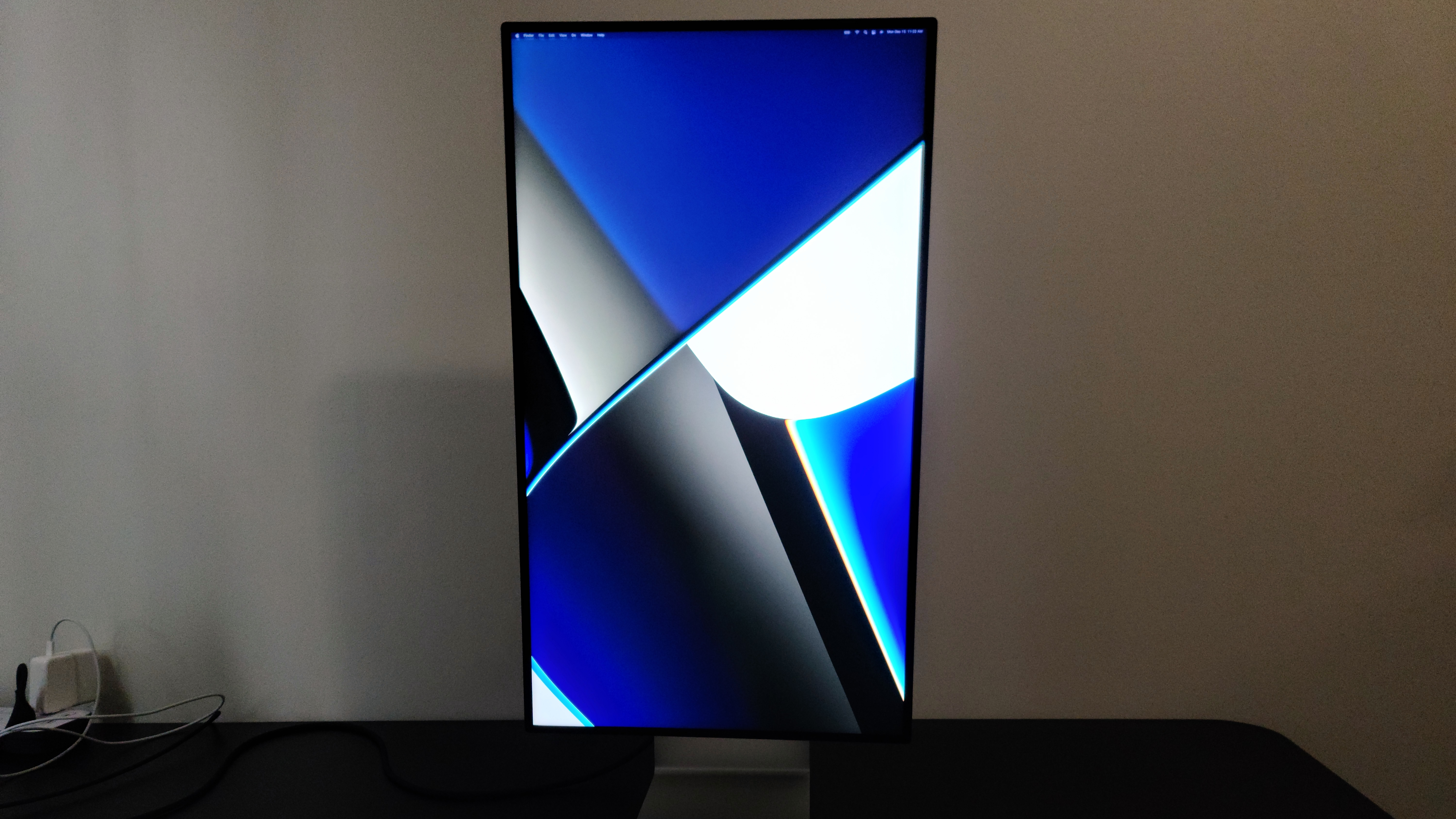
If you're a professional who needs all of this pinpoint-precise functionality for yourself or your team, and you don't want your work to exist slowed downward by picayune with things as pesky as the stand up (though the process for rotating from landscape to portrait mode took me a piddling getting used to), the $6,000 y'all will accept to pay to get started is undoubtedly worth it.
No, I don't need the Pro Brandish XDR, simply after spending so much time with it, I want it—in a way I've never wanted another monitor before.
But I don't need all that. My globe (and employment) aren't going to end if a few colors are a trivial off, and hooking upwards multiple monitors to PCs is so piece of cake these days that I can get close enough to that resolution and still salve thousands of dollars. For me, the cost is impossible to justify — and, unless this stuff is mission critical for you, I can't readily recommend you spend it, either.
Rumors have been floating around that Apple might release a lower-end version of this monitor sometime this twelvemonth, and an updated full model that takes advantage of the increased number of dimming zones and mini-LED technology the company has put in the new iPad Pro 2022 and MacBook Pro 2022 wouldn't surprise me. For dwelling house users, the quondam might be worth adopting a "wait and encounter" attitude; chances are it would save you hundreds, if non thousands of dollars. For professional users, the calculus is murkier.
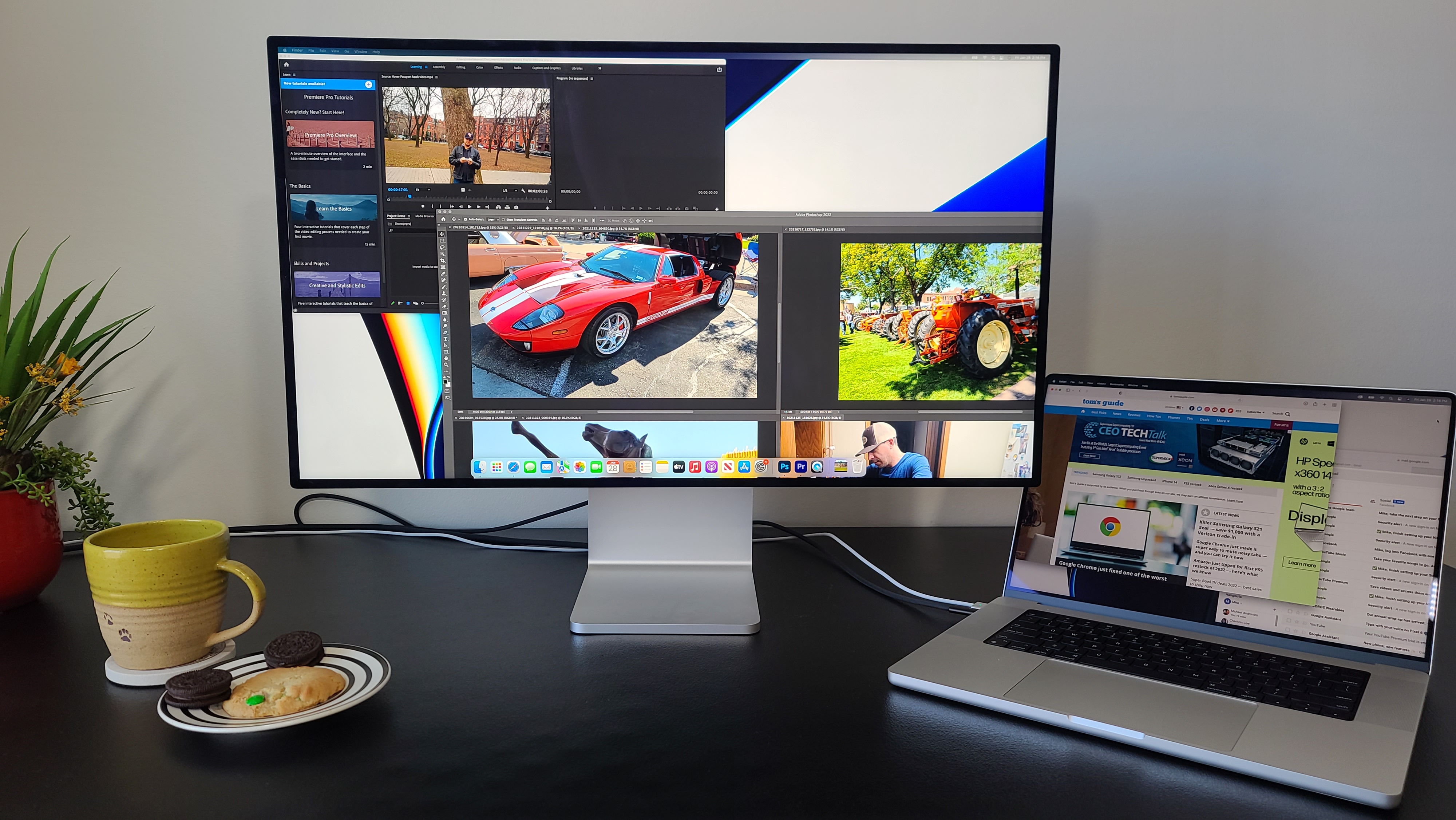
That'southward due to one incontestable fact: This Pro Display XDR is an outstanding monitor, one of the all-time monitors for MacBook Pros, and 1 I wish I could convince myself to buy. Its combination of rich brandish technologies, superb performance and rigorously thoughtful design not only point to the best of what Apple is just the all-time of what information technology's ever been — and what it's likely to be in the future. Nosotros're already seeing the trickle-down effect the Pro Brandish XDR has initiated, with the iPad Pro's and the MacBook Pro's screens looking and working better than ever, and offering a level of clarity fifty-fifty jaded professionals (like me) hadn't previously thought possible.
No, I don't need the Pro Display XDR, merely later on spending so much time with information technology, I want information technology—in a way I've never wanted another monitor earlier. Who knows? In some other few years, I might exist an Apple person again.
Note: After we published this story, Apple put out a support certificate noting that the Pro Display XDR volition automatically limit brightness if the brandish gets too hot. The issue besides impacts the MacBook Pro (2021) 16-inch , though it doesn't appear to be a widespread problem.

Source: https://www.tomsguide.com/opinion/i-used-apples-dollar5000-pro-display-xdr-monitor-for-a-month-heres-what-happened
Posted by: simmonsworythe.blogspot.com
0 Response to "I used Apple’s $5,000 Pro Display XDR monitor for a month — here's what happened"
Post a Comment